
A sequence is a series of emails with a set wait between them, started for one contact. Each step sends an email template.
A sequence stops by itself: when the contact writes back, when an email to them bounces, or when they unsubscribe, every email still scheduled to that contact is cancelled, whoever scheduled it. The "Going out" tab of the sales inbox lists what was stopped and why.
Create a sequence
Open "Communications" in the left menu:
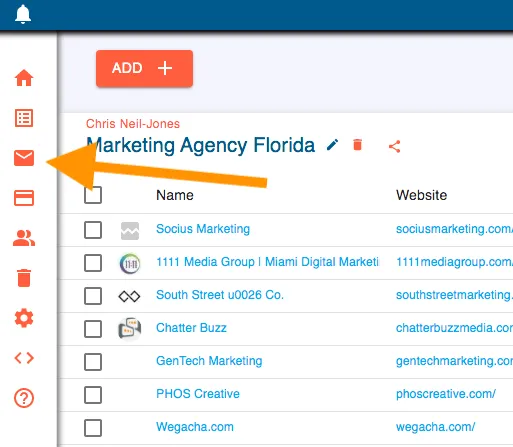
Select the Communication menu
Select the "Sequences" tab, click the + button and pick "Sequence":
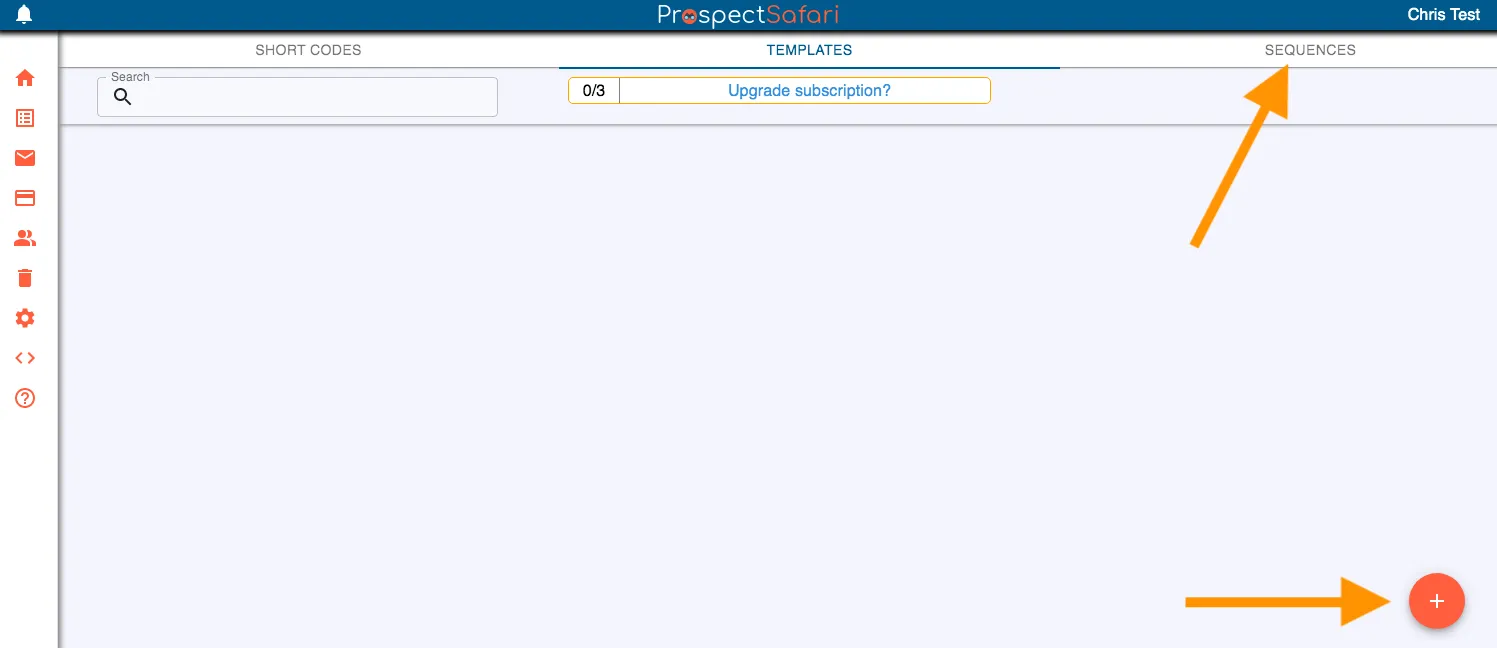
Select Sequences and then the + button to add a Sequence
- Enter a "Name" and a "Description". The description should remind you and your team how and when to use the sequence.
- Under "Sequence steps" click + to add the first step ("Email 1"). Enter the "Wait" (a number), pick the unit ("Seconds" to "Months") and the "Template"; the template's text shows beside it.
- Repeat for each step. Each step's wait counts from the step before it. The card then reads, for example, "1) After 2 days: send <template>".
- Click "Save".
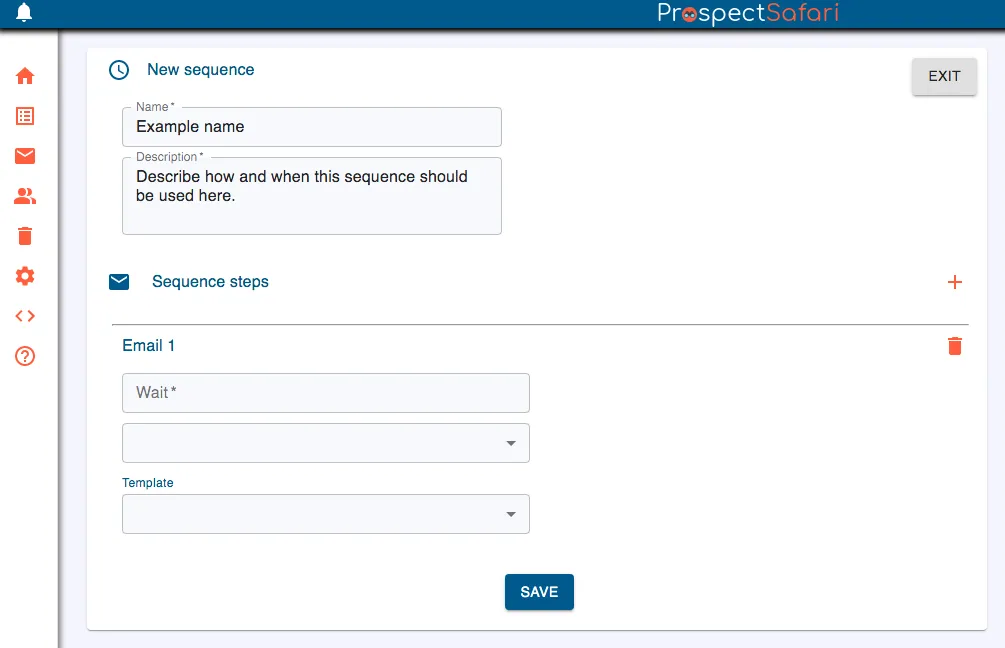
Add name and description then click + to add the first step
If a step uses one of your private templates, the form says that saving the sequence shares it with your workspace, so every team member can send it.
The three-dot menu on a sequence card offers "Edit" and "Delete". Search sequences by name or description, and drag cards into folders.
Start a sequence
In the send email form, switch to "Send sequence" and pick it under "Sequence Folder" / "Sequence". Each step is listed with its wait and a "(preview)" button. If its templates ask for custom text, you fill it in once for all steps. "Send" schedules every step at once.
Good to know:
- The first step goes out at the start time: now, or the "Date" you set with "Schedule" (a wait on step 1 fills in that date for you).
- All steps are scheduled when the sequence starts, so editing or deleting the sequence later does not change emails already scheduled.
- A sequence uses the reply-to address of its first template for every step.
- The whole team sees and starts sequences. Anyone can create one, within the plan's limit; only admins can edit or delete one.
- Each step is an email: tasks such as a phone call or a LinkedIn message can't be sequence steps. For a series of tasks of different types, use checklist steps in the Sales Coach: a step can be a "Phone call", "Cold call task", "Send message", "Send email" or "Data entry & research" task, each with its own due date, priority, queue and owner.